


Page 52 - GALENIKA MEDICAL JOURNAL
P. 52
to be due to UTI in individuals with bacteriuria . However,   colonies may be isolated if frequent urination disrupts the
                                                16
          atypical  symptoms  and  changes  in  the  patient's  clinical   incubation time of bacteria in the bladder due to frequent
          status, such as falls, reduced functionality, and changes in   emptying. Therefore, for men, the diagnosis of UTI is pre-
          mental status, are often attributed to UTIs in the elderly.   sent if pathogens are isolated in a number of 10  CFU/mL
                                                                                                     3
          Changes in the odor, color, and cloudiness of urine correla-  or more in a properly collected urine sample (except in the
          te with bacteriuria but are more commonly associated with   case of a permanent urinary catheter, when the criterion is
          worsening incontinence or dehydration rather than symp-  10  CFU/mL) . If pyelonephritis is suspected, finding a sin-
                                                               5
                                                                       15
          tomatic infection, so they are not sufficient for diagnosing   gle microorganism in a number of 10  CFU/mL or above is
                                                                                            4
          UTI 18-20 . Recognizing symptoms is very important because   the recommended diagnostic criterion. Finding microorga-
          they are the primary criteria for initiating therapy when UTI   nisms in a number of 10  CFU/mL or above is indicative of
                                                                                 2
          is suspected: acute dysuria or high temperature, acute con-  infection if the sample is obtained by a single-use catheteri-
          fusion or fever with worsening of one of the genitourinary   zation of the bladder .
                                                                              23
          symptoms (urgent urination, frequent urination, suprapu-
                                                                                                           15
          bic pain, hematuria, pain in the costovertebral region, uri-  Pyuria is a nonspecific laboratory finding in the elderly .
          nary incontinence) 21, 22 . This significantly reduces antibiotic   It is often positive even without bacteriuria, and in individu-
          use compared to the standard approach. In cases where the   als with bacteriuria, it does not differentiate symptomatic
          diagnosis is unreliable, it is advisable to monitor the patient   UTI from ASB. On the other hand, the absence of pyuria has
                                                                                                      24
          and, if local symptoms in the genitourinary tract area do not   a high negative predictive value for excluding UTI . When
          appear, the patient should be treated more as a condition of   UTI is suspected in individuals in nursing homes, it is advi-
          sepsis of unknown origin rather than as UTI .      sable to first examine the presence of pyuria. If the finding
                                             22
                                                             is negative, a urine culture should not be performed . In
                                                                                                         24
             Laboratory  diagnosis  is  necessary  for  definitive  dia-  women  older  than  80  years,  elevated  levels  of  leukocyte
          gnosis and treatment of UTIs in the elderly, given the high   esterase, interleukin IL-8, and IL-6 may indicate a differen-
          percentage of microorganism resistance . An exception is   ce between ASB and acute cystitis. However, determining
                                           15
          healthy women who have repeated acute cystitis in outpa-  these biomarkers does not have significant clinical signifi-
          tient settings, where short-term antibiotic therapy is usually   cance . In cases of suspected urosepsis, finding the same
                                                                  25
          effective. However, even in these cases, urine culture should   bacteria in both blood and urine indicates the source of the
          be performed if the desired effect on empirical therapy is   infection.
          not achieved, if symptoms are atypical, or if there is a rapid
          return of symptoms after treatment, all of which indicate a
          resistant pathogen.                                Antimicrobial treatment

             One  of  the  primary  obstacles  in  UTI  diagnosis  is  the   In  older  adults,  treatment  for  asymptomatic  bacteri-
          necessity of proper urine sampling for analysis to prevent   uria (ASB) is not recommended as it does not reduce the
          sample contamination. In women who are unable to follow   occurrence and frequency of subsequent UTIs, nor does it
          instructions, a single-use catheterization is performed, whi-  alleviate symptoms, and it may lead to the emergence of
          le in men, a clean condom catheter is used. The diagnostic   unwanted  treatment  effects .  Therefore,  screening  older
                                                                                     2
          criterion involves finding more than 10  CFU/mL of a single   adults for ASB is not indicated.
                                         5
          microorganism in the urine sample. When a smaller num-
          ber of colonies is isolated or multiple microorganisms are   When selecting antimicrobial therapy, one should consi-
          present,  the  urine  culture  result  is  interpreted  by  clinical   der the drug's effectiveness, patient tolerance, clinical pre-
          symptoms. A lower colony count is encountered in about   sentation of the disease, renal function, need for parenteral
          10%  of  healthy  postmenopausal  women  with  acute  un-  administration routes, and treatment cost. If the clinical pi-
          complicated UTI . Additionally, in UTIs, a lower number of   cture allows, waiting for the results of the urine culture is
                       13
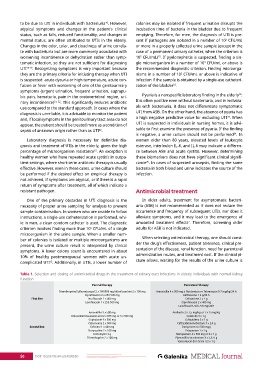
          Table 1. Selection and dosing of antimicrobial drugs in the treatment of urinary tract infections in elderly individuals with normal kidney
          function
                                          Peroral therapy                          Parenteral therapy
                           Trimethoprim/Sulfametoxazol 2 x 160/800 mg Nitrofurantoin 2 x 100 mg   Amoxicillin 4 x 500 mg ± Gentamicin or Tobramycin 5-7 mg/kg/24 h
                                       Ciprofloxacin 2 x 250-500 mg               Ceftriaxone 1-2 g/24 h
               First line               Norfloxacin 2 x 400 mg                     Cefotaxime 3 x 1 g
                                       Levofloxacin 1 x 250-500 mg                Ciprofloxacin 2 x 400 mg
                                                                                Levofloxacin 500-750 mg/24 h
                                        Amoxicillin 3 x 500 mg                Amikacin 2 x 7,5 mg/kg or 1 x 15 mg/kg
                                 Amoxicillin/clavulanic acid 2 x 875 mg or 3 x 500 mg   Cefazolin 3 x 1 g
                                        Cephalexin 4 x 500 mg                      Ceftazidime 3 x 1 g
                                        Cefuroxime 2 x 500 mg                   Ceftazidime/Avibactam 3 x 2,5 g
              Second line                Cefixime 1 x 400 mg                      Doripenem 4 x 500 mgg
                                        Doxycycline 2 x 100 mg                     Ertapenem 1 x 1 g
                                          Fosfomycin 3 g                       Meropenem 4 x 500 mg or 3 x 1 g
                                        Trimethoprim 2 x 100 mg                Piperacillin/Tazobactam 3 x 3,375 g
                                                                                Vancomycin (for Gram+) 2 x 1 g


          50     DOI: 10.5937/Galmed2409055D

