


Page 10 - GALENIKA MEDICAL JOURNAL
P. 10
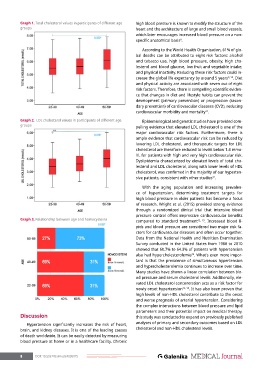
Graph 1. Total cholesterol values in participants of different age   high blood pressure is known to modify the structure of the
          groups                                             heart and the architecture of large and small blood vessels,
                                                             which later encourages increased blood pressure on a non-
                                                             specific anatomical basis .
                                                                                 8
                                                                According to the World Health Organization, 61% of glo-
                                                             bal deaths can be attributed to eight risk factors: alcohol
                                                             and  tobacco  use,  high  blood  pressure,  obesity,  high  cho-
                                                             lesterol and blood glucose, low fruit and vegetable intake,
                                                             and physical inactivity. Reducing these risk factors could in-
                                                             crease the global life expectancy by around 5 years 9, 10 . Diet
                                                             and physical activity are associated with seven out of eight
                                                             risk factors. Therefore, there is compelling scientific eviden-
                                                             ce that changes in diet and lifestyle habits can prevent the
                                                             development  (primary  prevention)  or  progression  (secon-
                                                             dary prevention) of cardiovascular diseases (CVD), reducing
                                                             cardiovascular morbidity and mortality .
                                                                                            11
          Graph 2.  LDL cholesterol values in participants of different age   Epidemiological and genetic studies have provided com-
          groups                                             pelling evidence that elevated LDL cholesterol is one of the
                                                             major  cardiovascular  risk  factors.  Furthermore,  there  is
                                                             ample evidence that cardiovascular risk can be reduced by
                                                             lowering LDL cholesterol, and therapeutic targets for LDL
                                                             cholesterol are therefore reduced to levels below 1.4 mmo-
                                                             l/L for patients with high and very high cardiovascular risk.
                                                             Dyslipidemia characterized by elevated levels of total cho-
                                                             lesterol and LDL cholesterol, along with lower levels of HDL
                                                             cholesterol, was confirmed in the majority of our hyperten-
                                                             sive patients, consistent with other studies .
                                                                                               12
                                                                With  the  aging  population  and  increasing  prevalen-
                                                             ce  of  hypertension,  determining  treatment  targets  for
                                                             high blood pressure in older patients has become a focus
                                                             of research. Wright et al. (2015) provided strong evidence
                                                             through  a  randomized  clinical  trial  that  intensive  blood
                                                             pressure control offers impressive cardiovascular benefits
          Graph 3. Relationship between age and homocysteine  compared  to  standard  treatment 12, 13 .  Increased  blood  li-
                                                             pids and blood pressure are considered two major risk fa-
                                                             ctors for cardiovascular diseases and often occur together.
                                                             Data from the National Health and Nutrition Examination
                                                             Survey conducted in the United States from 1988 to 2010
                                                             showed that 60.7% to 64.3% of patients with hypertension
                                                             also had hypercholesterolemia . What's even more impor-
                                                                                      13
                                                             tant  is  that  the  prevalence  of  simultaneous  hypertension
                                                             and hypercholesterolemia continues to increase over time.
                                                             Many studies have shown a linear correlation between blo-
                                                             od pressure and serum cholesterol levels. Additionally, ele-
                                                             vated LDL cholesterol concentration acts as a risk factor for
                                                             newly onset hypertension 13, 14 . It has also been proven that
                                                             high levels of non-HDL cholesterol contribute to the onset
                                                             and worse prognosis of arterial hypertension. Considering
                                                             the complex interactions between blood pressure and lipid
                                                             parameters and their potential impact on medical therapy,
          Discussion                                         this study was conducted to expand on previously published

             Hypertension  significantly  increases  the  risk  of  heart,   analyses of primary and secondary outcomes based on LDL
          brain, and kidney diseases. It is one of the leading causes   cholesterol and non-HDL cholesterol levels.
          of death worldwide. It can be easily detected by measuring
          blood pressure at home or in a healthcare facility. Chronic


          8      DOI: 10.5937/Galmed2409007S

