


Page 74 - GALENIKA MEDICAL JOURNAL
P. 74
are contraindicated. Only emergency interventions, for vital   prolonged fasting, malnutrition, circulatory disorders, sep-
          indications, should be performed .                 tic shock, liver and/or kidney and/or adrenal insufficiency,
                                     29
                                                             more frequently in geriatric patients, unconscious patients,
             Hyperglycemia occurs as a result of the combined acti-  and hypoglycemia can also be contributed by hypopituita-
          on of three processes: increased gluconeogenesis, accele-  rism, immobilization, and others. Sometimes, just missing
          rated glycolysis, and reduced utilization of glucose by pe-  one meal, changing antidiabetic therapy, or the site of in-
          ripheral tissues. In DKA is also lipolysis (increased release   sulin injection is enough to cause hypoglycemia. The clinical
          of fatty acids from adipose tissue into circulation), leading   presentation and treatment of hypoglycemia depend on its
          to  uncontrolled  oxidation  of  fats  in  the  liver,  resulting  in   severity, ranging from mild to very severe (Table 3).
                                                                                              33
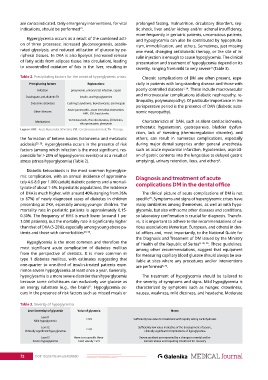
          Table 2. Precipitating factors for the onset of hyperglycemic crises  Chronic  complications  of  DM  are  often  present,  espe-

              Precipitating factors     Explanations         cially in patients with long-standing disease and those with
                  Infection      pneumonia, urinary tract infection, sepsis  poorly controlled diabetes 2, 34 . These include macrovascular
                                                             and microvascular complications (diabetic nephropathy, re-
             Inadequate anti-diabetic Th  insulin, oral hypoglycemics
                                                             tinopathy, polyneuropathy). Of particular importance in the
               Endocrine disorders  Cushing's syndrome, thyrotoxicosis, acromegaly
                                                             perioperative period is the presence of DAN (diabetic auto-
                               Acute pancreatitis, acute intestinal obstruction,
                Other diseases                               nomic neuropathy).
                                      AMI , CVI, heat stroke
                                Corticosteroids, thiazide diuretics, β-blockers,
                 Medications                                    Characteristics of  DAN, such as silent cardiac ischemia,
                                    chlorpromazine, phenytoin
                                                             orthostatic  hypotension,  gastroparesis,  bladder  dysfun-
          Legend: AMI - Acute Myocardial Infarction; CVI - Cerebrovascular Insult; Th - Therapy.
                                                             ction,  lack  of  sweating  (thermoregulation  disorder),  and
          the formation of ketone bodies (ketonemia and metabolic   others,  can  result  in  numerous  complications,  especially
          acidosis) 29, 30 . Hyperglycemia occurs in the presence of risk   during  major  dental  surgeries  under  general  anesthesia,
          factors (among which infection is the most significant, res-  such as acute myocardial infarction, hypotension, aspirati-
          ponsible for > 20% of hyperglycemic events) or as a result of   on of gastric contents into the lungs (due to delayed gastric
          stress (stress hyperglycemia) (Table 2).           emptying), urinary retention, ileus, and others .
                                                                                                  2
             Diabetic ketoacidosis is the most common hyperglyce-
          mic complication, with an annual incidence of approxima-  Diagnosis and treatment of acute
          tely 4.6-8.0 per 1.000 (adult) diabetic patients and a mortali-  complications DM in the dental office
          ty rate of about 1-5%. In pediatric populations, the incidence
          of  DKA is much higher, with around 40% (ranging from 26%   The clinical picture of acute complications of DM is not
          to  67%)  of  newly  diagnosed  cases  of  diabetes  in  children   specific . Symptoms and signs of hyperglycemic crises have
                                                                   29
          presenting as DKA, especially among younger children. The   many similarities among themselves, as well as with hypo-
          mortality  rate  in  pediatric  patients  is  approximately  0.15-  glycemia, but also with some other diseases and conditions,
          0.30%. The frequency of HHS is much lower (around 1 per   so laboratory confirmation is crucial for diagnosis. Therefo-
          1.000 patients), but the mortality rate is significantly higher   re, it is important to adhere to the recommendations of va-
          than that of DKA (5-20%), especially among young obese pa-  rious associations (American, European, and others) in den-
          tients and those with comorbidities 29, 30 .       tal offices and, most importantly, to the National Guide for
                                                             the Diagnosis and Treatment of DM issued by the Ministry
             Hypoglycemia  is  the  most  common  and  therefore  the   of Health of the Republic of Serbia 8, 30, 35 . These guidelines,
          most  significant  acute  complication  of  diabetes  mellitus   among  other  recommendations,  suggest  that  equipment
          from  the  perspective  of  dentists.  It  is  more  common  in   for measuring capillary blood glucose should always be ava-
          type  1  diabetes  mellitus,  with  estimates  suggesting  that   ilable at sites where any procedures and/or interventions
          one-quarter  to  one-third  of  insulin-treated  patients  expe-  are performed 8, 36 .
          rience severe hypoglycemia at least once a year. Generally,
          hypoglycemia is a more severe disorder than hyperglycemia   The  treatment  of  hypoglycemia  should  be  tailored  to
          because some cells/tissues can exclusively use glucose as   the severity of symptoms and signs. Mild hypoglycemia is
          an  energy  substrate  (e.g.,  the  brain) .  Hypoglycemia  oc-  characterized  by  symptoms  such  as  hunger,  drowsiness,
                                        32
          curs in the presence of risk factors such as missed meals or   nausea, weakness, mild dizziness, and headache. Moderate

          Table 3. Severity of hypoglycemia
             Level (severity) of glycemia  Value of glycemia                 Notes
                   Level 1
                Mild hypoglycemia      < 3.9                Sufficiently low value for treatment with rapidly acting carbohydrates
                   Level 2                                    Sufficiently low value indicative of the development of severe,
            Clinically significant hypoglycemia  < 3.0           clinically significant complications of hypoglycemia
                   Level 3        there is no specific thres-  Severe accident accompanied by a change in mental and/or
                Severe hypoglycemia  hold; usually < 2.3         somatic status and requiring treatment for recovery


          72     DOI: 10.5937/Galmed2409080D

