


Page 45 - GALENIKA MEDICAL JOURNAL
P. 45
Traditional risk factors: The                       who have experienced AMI if secondary prevention measu-
            Seven Countries Study and                           res are inadequately implemented.
            the Framingham Study                                  The Framingham Study  began at a time when little was
                                                                                     14
               The Seven Countries study was the first epidemiological   known about coronary heart disease and the risk factors le-
                                    9
            study to investigate the impact of diet and physical activity   ading to its development. Initiated in 1948 in Framingham,
            on the development of cardiovascular diseases.      a town of 28.000 residents near Boston University, it was se-
                                                                lected to conduct one of the largest epidemiological studies
               Keys  and  colleagues  observed  significant  diversity  in   on cardiovascular diseases .
                                                                                     15
            dietary patterns and saturated fat intake across 15 different
            cohorts of patients from seven countries (former Yugoslavia   At first, the study included 5,209 healthy individuals. The
                                                                original aim was to identify common factors or characteri-
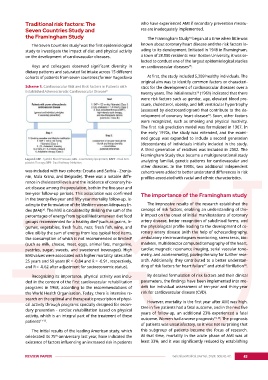
            Scheme 1. Cardiovascular Risk and Risk Factors in Patients with   stics for the development of cardiovascular diseases over a
            Established Atherosclerotic Cardiovascular Disease 8  twenty years. The initial results  (1961) indicated that there
                                                                                        16
                                                                were risk factors such as gender, age, elevated blood pre-
                                                                ssure, cholesterol, obesity, and left ventricular hypertrophy
                                                                (assessed by electrocardiogram) that contribute to the de-
                                                                velopment of coronary heart disease . Soon, other factors
                                                                                             14
                                                                were recognized, such as smoking and physical inactivity.
                                                                The first risk prediction model was formulated in 1967. In
                                                                the  early  1970s,  the  study  was  extended,  and  the  exami-
                                                                ned group was expanded to include a second generation
                                                                (descendants) of individuals initially included in the study.
                                                                A  third  generation  of  relatives  was  included  in  2002.  The
                                                                Framingham Study thus became a multigenerational study
            Legend: SBP - Systolic Blood Pressure; LDL - Low Denisty lipoprotein; DAPT - Dual Anti-  analyzing familial, genetic patterns for cardiovascular and
            platelet Therapy; DPI - Dual Pathway Inhibition.
                                                                other  diseases.  In  the  1990s,  two  additional  independent
            was included with two cohorts: Croatia and Serbia - Zrenja-  cohorts were added to better understand differences in risk
            nin, Mala Krsna, and Belgrade). There was a notable diffe-  profiles associated with racial and ethnic characteristics.
            rence in cholesterol levels and the incidence of coronary he-
            art disease among the population, both in the five-year and
            ten-year follow-up periods. This association was confirmed   The importance of the Framingham study
            in the twenty-five-year and fifty-year mortality follow-up, le-
            ading to the formulation of the Mediterranean Adequacy In-  The impressive results of the research established the
            dex (MAI) . The MAI is calculated by dividing the sum of the   concept of risk factors, enabling an understanding of the-
                    10
            percentages of energy from typical Mediterranean diet food   ir impact on the onset of initial manifestations of coronary
            groups recommended for a healthy diet (such as grains, le-  artery disease, better recognition of subclinical forms, and
                                            8
            gumes, vegetables, fresh fruits, nuts, fresh fish, wine, and   the physiological profile leading to the development of co-
            olive oil) by the sum of energy from less typical food items,   ronary artery disease (with the help of echocardiography,
            the consumption of which is not recommended or limited    ambulatory electrocardiogram monitoring, stress tests, bio-
                                                           8
            (such as milk, cheese, meat, eggs, animal fats, margarine,   markers, multidetector computed tomography of the heart,
            pastries,  sugar,  sweets,  and  sweetened  beverages).  High   cardiac magnetic resonance imaging, serial vascular tono-
            MAI values were associated with higher mortality rates after   metry, and accelerometry), paving the way for further rese-
            25 years and 50 years (R = -0.84 and R = -0.91, respectively,   arch. Additionally, they contributed to a better understan-
                                                                                                             18
                                                                                            17
            and R = -0.62 after adjustment for socioeconomic status).  ding of risk factors for heart failure  and atrial fibrillation .
               Recognizing its importance, physical activity was inclu-  By detailed formulation of risk factors and their clinical
            ded in the content of the first cardiovascular rehabilitation   parameters, the findings have been implemented into mo-
            programs  in  1968,  according  to  the  recommendations  of   dels for individual assessment of ten-year and thirty-year
            the World Health Organization. Today, there is intensive re-  risk for cardiovascular disease (CVD).
            search on the optimal and therapeutic prescription of physi-
                                                                  However, mortality in the first year after AMI was high.
            cal activity through programs specially designed for secon-  One in five patients had a fatal outcome, and in the next five
            dary prevention - cardiac rehabilitation based on physical
            activity, which is an integral part of the treatment of these   years  of  follow-up,  an  additional  23%  experienced  a  fatal
                                                                                                   . The prognosis
                                                                outcome. Women had a worse prognosis
                                                                                                19, 20
            patients 11-13 .
                                                                of patients was unsatisfactory, so it was not surprising that
               The initial results of the leading American study, which   this  subgroup  of  patients  became  the  focus  of  research.
            celebrated its 75 -anniversary last year, have indicated the   At  that  time,  mortality  in  the  acute  phase  of  AMI  was  at
                          th
            existence of factors influencing an increased risk in patients   least 33%, and it was significantly reduced by establishing
            REVIEW PAPER                                                      Galenika Medical Journal, 2024; 3(9):42-47.  43

