


Page 39 - GALENIKA MEDICAL JOURNAL
P. 39
to normalization of the nocturnal blood pressure pattern in   during the night . In one pilot study involving patients with
                                                                             3
            salt-sensitive patients . All forms of nocturnal hypertension   obstructive sleep apnea (OSA), a higher correlation was in-
                              14
            can be the first manifestation of hypertension, most com-  dicated between nocturnal blood pressure values measured
            monly as a result of excessive sympathetic activity, which   in home settings compared to those obtained with ABPM,
            links it to adverse cardiovascular events (stroke, coronary   with the severity of the disease . Supporting this modality
                                                                                         17
            artery disease, heart failure) or damage to other target or-  is the absence of significant discrepancies in values obta-
            gans  (renal  dysfunction  or  cognitive  disorders).  A  serious   ined through home monitoring and ABPM, as well as the
            problem is that nocturnal hypertension often remains un-  correlation of such measured values with target organ da-
            detected for a long time . This especially applies to isola-  mage .
                                                                    18
                                15
            ted nocturnal hypertension. On the other hand, nocturnal
            hypertension can be a characteristic of an advanced stage
            of  hypertension.  In  these  circumstances,  the  increase  in   The impact of nocturnal hypertension
            nocturnal values is explained by the fact that in the supine   on target organ damage and
            position, with an increase in circulating fluid volume, there   cardiovascular outcomes
            is increased venous return and increased wall stress of the
            left ventricle .                                      The absence of the expected decrease in blood pressure
                      16
                                                                values during the night by ≥ 10% (non-dipping) is found in
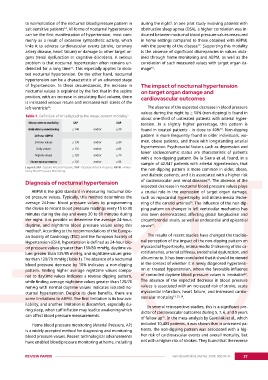
            Table 1. Definition of AH adapted to the measurement modality 3
                                                                about one-third of untreated patients with arterial hyper-
              Measurement modality  SAP              DAP        tension.  In  a  slightly  higher  percentage,  this  pattern  is
                                                                                                   10
              Ambulatory monitoring  ≥ 140  and/or   ≥ 90       found in treated patients - in close to 40% . Non-dipping
                24-hour ABPM                                    pattern is more frequently found in older individuals, wo-
                24-hour values   ≥ 130     and/or    ≥ 80       men, obese patients, and those with longstanding arterial
                                                                hypertension. Psychosocial factors such as depression and
                 Daily values    ≥ 135     and/or    ≥ 85
                                                                lower  socioeconomic  status  are  characteristic  of  patients
                 Nightly values  ≥ 120     and/or    ≥ 70
                                                                with a non-dipping pattern. De la Sierra et al. found, in a
               Home measurement  ≥ 135     and/or    ≥ 85       sample of 42,947 patients with arterial hypertension, that
            Legend: SAP - Systolic Arterial Pressure; DAP - Diastolic Arterial Pressure; ABPM - Ambu-  the non-dipping pattern is more common in older, obese,
            latory Blood Pressure Monitoring.
                                                                and diabetic patients, and it is associated with a higher risk
                                                                                             19
            Diagnosis of nocturnal hypertension                 of cardiovascular and renal diseases . The absence of the
                                                                expected decrease in nocturnal blood pressure values plays
               ABPM is the gold standard in measuring nocturnal blo-  a  crucial  role  in  the  expression  of  target  organ  damage,
            od pressure values. Typically, this method determines the   such as myocardial hypertrophy and intima-media thicke-
            average  24-hour  blood  pressure  values  by  programming   ning of the carotid arteries . The influence of the non-dip-
                                                                                     20
            the device to record blood pressure readings every 15 to 30   ping pattern on changes in left ventricular mechanics has
            minutes during the day and every 30 to 60 minutes during   also been demonstrated, affecting global longitudinal and
            the night. It is possible to determine the average 24-hour,   circumferential strain, as well as endocardial and epicardial
            daytime,  and  nighttime  blood  pressure  values  using  this   strain .
                                                                    21
            method . According to the recommendations of the Europe-
                   3
            an Society of Cardiology (ESC) and the European Society of   The results of recent studies have changed the traditio-
            Hypertension (ESH), hypertension is defined as 24-hour blo-  nal perception of the impact of the non-dipping pattern on
            od pressure values greater than 130/80 mmHg, daytime va-  myocardial hypertrophy, intima-media thickening of the ca-
            lues greater than 135/85 mmHg, and nighttime values grea-  rotid arteries, arterial stiffness, endothelial dysfunction, and
            ter than 120/70 mmHg (Table 1). The absence of a nocturnal   albuminuria. It has been concluded that it should be viewed
            blood  pressure  decrease  by  10%  indicates  a  non-dipping   in the context of whether it is newly diagnosed hypertensi-
            pattern.  Finding  higher  average  nighttime  values  compa-  on or treated hypertension, where the favorable influence
                                                                                                             22
            red to daytime values indicates a reverse dipping pattern,   of controlled daytime blood pressure values is inevitable .
            while finding average nighttime values greater than 120/70   The  absence  of  the  expected  decrease  in  blood  pressure
            mmHg  with  normal  daytime  values  indicates  isolated  no-  values is associated with an increased risk of stroke, acute
            cturnal  hypertension.  Despite  its  clear  benefits,  there  are   myocardial  infarction,  heart  failure,  and  increased  cardio-
            some limitations to ABPM. The first limitation is its low ava-  vascular mortality 19, 23, 24 .
            ilability, and another limitation is discomfort, especially du-  In several retrospective studies, this is a significant pre-
            ring sleep, when cuff inflation may lead to awakening which   dictor of cardiovascular outcomes during 5, 7, 6, and 9 years
            can affect blood pressure measurements.
                                                                of follow-up . In the meta-analysis by Gavriilaki et al., which
                                                                         25
               Home blood pressure monitoring (Arterial Pressure, AP)   included 10,483 patients, it was shown that in untreated pa-
            is a widely accepted method for diagnosing and monitoring   tients, the non-dipping pattern was associated with a hig-
            blood pressure values. Recent technological advancements   her risk of cardiovascular events and overall mortality, but
            have enabled blood pressure monitoring at home, including   not with a higher risk of strokes. They found that the reverse


            REVIEW PAPER                                                      Galenika Medical Journal, 2024; 3(9):35-41.  37

