


Page 24 - GALENIKA MEDICAL JOURNAL
P. 24
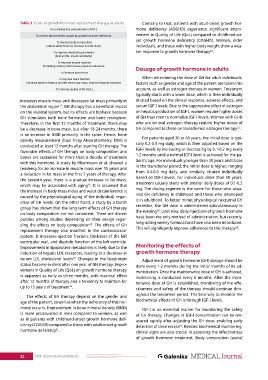
Table 3. Goals of growth hormone replacement therapy in adults  Contrary to that, patients with adult-onset growth hor-
                       To normalize the concentration of IGF-I  mone  deficiency  (AOGHD)  experience  significant  impro-
                 To correct abnormalities caused by growth hormone deficiency  vement in Quality of Life (QoL) compared to childhood-on-
                                                             set  growth  hormone  deficiency  (COGHD).  Women,  older
                          - To improve body composition
                      (reduce abdominal fat, increase muscle mass)  individuals, and those with higher body weight show a wea-
                                                                                              22
                        - To improve metabolic parameters    ker response to growth hormone therapy .
                          (lipid profile, insulin sensitivity)
                          - To improve muscle function
                    (including cardiac) and increase physical endurance
                                                             Dosage of growth hormone in adults
                           - To increase bone mass
                                                                When determining the dose of GH for adult individuals,
                           - To improve heart function
             (increase ejection fraction and left ventricular mass, improve diastolic function)  factors such as gender and age of the patient are taken into
                         - To improve quality of life (QoL)  account, as well as estrogen therapy in women. Treatment
                                                             typically starts with a lower dose, which is then individually
          increases muscle mass and decreases fat mass primarily in   titrated based on the clinical response, adverse effects, and
          the abdominal region . GH therapy has a beneficial impact   serum IGF-I levels. Due to the suppressive effect of estrogen
                           17
          on the skeletal system, but its effects are biphasic because   on hepatic production of IGF-I, women require higher doses
          GH stimulates both bone formation and bone resorption.   of GH than men to normalize IGF-I levels. Women with GHD
          Therefore, in the first 12 months of treatment, there may   who are on oral estrogen therapy require higher doses of
          be a decrease in bone mass, but after 18-24 months, there   GH compared to those on transdermal estrogen therapy .
                                                                                                          23
          is an increase in BMD primarily in the spine. Hence, bone
          density measurement (Dual X-ray Absorptiometry, DXA) is   For patients aged 30 to 60 years, the initial dose is typi-
          conducted at least 12 months after starting GH therapy. The   cally 0.2-0.3 mg daily, which is then adjusted based on the
          favorable effects of GH therapy on body composition and   IGF-I levels by increasing or decreasing by 0.1-0.2 mg every
          bones are sustained for more than a decade of treatment   1-2 months until a normal IGF-I level is achieved for the pa-
          with this hormone. A study by Elbornsson et al. showed a   tient's age. For individuals younger than 30 years and those
          tendency for an increase in muscle mass over 15 years and   in the transitional period, the initial dose is higher, ranging
          a reduction in fat mass in the first 7 years of therapy. After   from  0.4-0.5  mg  daily,  and  similarly  titrated  individually
          the seventh year, there is a gradual increase in fat mass,   based on IGF-I levels. For individuals older than 60 years,
          which may be associated with aging . It is assumed that   treatment usually starts with smaller daily doses of 0.1-0.2
                                        18
          the increase in body mass index and waist circumference is   mg. The dosing regimen is the same for those who acqu-
          caused by the physiological aging of the individual, regar-  ired GH deficiency in childhood and those who developed
          dless of GH levels. On the other hand, a study by a Dutch   it in adulthood. To better mimic physiological nocturnal GH
          group has shown that the long-term effects of GH therapy   secretion, the GH dose is administered subcutaneously in
                                                                       24
          on body composition are not consistent. There are discre-  the evening . Until now, daily injections of growth hormone
          pancies  among  studies  depending  on  their  design  regar-  have been the only method of administration, but recently,
          ding the effects on body composition . The effects of GH   long-acting weekly formulations have also been introduced.
                                         19
                                                                                                          25
          replacement  therapy  also  manifest  in  the  cardiovascular   This will significantly improve adherence to this therapy .
          system. It increases ejection fraction, thickness of the left
          ventricular wall, and diastolic function of the left ventricle.
          Improvement in lipoprotein metabolism is likely due to the   Monitoring the effects of
          induction of hepatic LDL receptors, leading to a decrease in   growth hormone therapy
          serum LDL cholesterol levels . Changes in the lipoprotein   Adjustment of growth hormone (GH) dosage should be
                                 20
          status become evident after one year of GH therapy. Impro-  done every 1-2 months during the initial months of its ad-
          vement in Quality of Life (QoL) on growth hormone therapy   ministration. Once the maintenance dose of GH is achieved,
          is apparent as early as three months, with maximal effect   monitoring is conducted every 6 months. After the main-
          after 12 months of therapy and a tendency to maintain for   tenance dose of GH is established, monitoring of the effe-
          up to 15 years of treatment .                      ctiveness and safety of the therapy should continue thro-
                                12
             The effects of GH therapy depend on the gender and   ughout the treatment period. The best way to monitor the
          age of the patient, as well as when the deficiency of this hor-  biochemical effects of GH is through IGF-I levels.
          mone occurrs. Improvement in bone mineral density (BMD)   IGF-I  is  an  essential  marker  for  monitoring  the  safety
          is more pronounced in men compared to women, as well   of GH therapy. Changes in IGF-I concentration can be me-
          as in patients with childhood-onset growth hormone defi-  asured rapidly after adjusting the GH dose, enabling early
          ciency (COGHD) compared to those with adult-onset growth   detection of dose excess . Besides biochemical monitoring,
                                                                                 24
          hormone deficiency .                               clinical signs are also crucial in assessing the effectiveness
                          21
                                                             of  growth  hormone  treatment.  Body  composition  (waist/


          22     DOI: 10.5937/Galmed2409023D

