


Page 30 - GALENIKA MEDICAL JOURNAL
P. 30
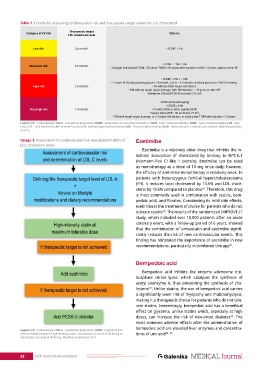
Table 1. Criteria for assessing cardiovascular risk and therapeutic target values for LDL cholesterol
                                Therapeutic target
             Category of CV risk                                            Criteria
                               LDL-cholesterol level

                Low risk          3.0 mmol/L                               • SCORE  < 1%


                                                                         • SCORE  ≥ 1% i < 5%
              Moderate risk       2.6 mmol/L
                                                  • Younger individuals (T1DM < 35 years; T2DM < 50 years) with duration of DM < 10 years, without other RF.
                                                                         • SCORE  ≥ 5%  i < 10%
                                                   • 1 major RF (fasting plasma glucose > 8 mmol/L, LDL-h > 4.9 mmol/L or blood pressure ≥ 180/110 mmHg.
                High risk         1.8 mmol/L                         • FH without other major risk factors.
                                                          • DM without target organ damage, with DM duration  ≥ 10 years or other RF
                                                                  • Moderate CKD (eGFR 30-59 mL/min/1.73 m 2 ).

                                                                        • ACVD (clinical/imaging)
                                                                           • SCORE ≥ 10%
              Very high risk      1.4 mmol/L                         • FH with ACVD or other significant RF
                                                                   • Severe CKD (eGFR < 30 mL/min/1.73 m²).
                                                   • DM with target organ damage, or ≥ 3 major risk factors, or early onset T1DM with duration > 20 years.
          Legend: CV - Cardiovascular; LDL-h - Low density lipoprotein; SCORE - Systematic Coronary Risk Estimation; T1DM - Type 1 Diabetes Mellitus; T2DM - Type 2 Diabetes Mellitus; RF - Risk
          Factor; TC - Total cholesterol; AP - Arterial Pressure; FH - Familial Hypercholesterolemia; CKD - Chronic Kidney Disease; ACVD - Atherosclerotic Cardiovascular Disease. Modified according
          to ref. 9.
          Image 1. Assessment of cardiovascular risk and determination of   Ezetimibe
          LDL cholesterol levels
                                                                Ezetimibe is a relatively older drug that inhibits the in-
                                                             testinal  absorption  of  cholesterol  by  binding  to  NPC1L1
                                                             (Niemann-Pick  C1-like  1  protein).  Ezetimibe  can  be  used
                                                             as monotherapy at a dose of 10 mg once daily; however,
                                                             the efficacy of ezetimibe monotherapy is relatively weak. In
                                                             patients  with  heterozygous  familial  hypercholesterolemia
                                                             (FH), it reduces total cholesterol by 13.5% and LDL chole-
                                                             sterol by 18.6% compared to placebo . Therefore, this drug
                                                                                           18
                                                             is most commonly used in combination with statins, bem-
                                                             pedoic acid, and fibrates. Considering its mild side effects,
                                                             ezetimibe is the treatment of choice for patients who do not
                                                             tolerate statins . The results of the randomized IMPROVE-IT
                                                                         19
                                                             study, which included over 18,000 patients after an acute
                                                             coronary event, with a follow-up period of 6 years, showed
                                                             that the combination of simvastatin and ezetimibe signifi-
                                                             cantly reduces the risk of new cardiovascular events. This
                                                             finding has reinstated the importance of ezetimibe in new
                                                             recommendations, particularly in combined therapy .
                                                                                                       20


                                                             Bempedoic acid
                                                                Bempedoic  acid  inhibits  the  enzyme  adenosine  trip-
                                                             hosphate  citrate  lyase,  which  catalyzes  the  synthesis  of
                                                             acetyl  coenzyme  A,  thus  preventing  the  synthesis  of  cho-
                                                             lesterol . Unlike statins, the use of bempedoic acid carries
                                                                   21
                                                             a significantly lower risk of myopathy and rhabdomyolysis,
                                                             making it a therapeutic choice for patients who do not tole-
                                                             rate statins. Interestingly, bempedoic acid has a beneficial
                                                             effect on glycemia, unlike statins which, especially at high
                                                             doses,  can  increase  the  risk  of  new-onset  diabetes .  The
                                                                                                       22
                                                             most common adverse effects after the administration of
                                                             bempedoic acid are elevated liver enzymes and concentra-
          Legend: CV - Cardiovascular; LDL-h - Low density lipoprotein; PCSK9 - Proprotein Con-
          vertase Subtilisin Kexin-9; High-intensity statin - rosuvastatin at a dose of 20-40 mg or   tions of uric acid 22,  23 .
          atorvastatin at a dose of 40-80 mg. Modified according to ref. 9.


          28     DOI: 10.5937/Galmed2409031L

